
Why We Choose Small Groups


People often ask why our trainings are intentionally kept small.
Why not take more students? Why not open larger groups?
The simple answer is: these trainings are meant to be this way.
Over the years, I’ve come to realise that transformation rarely happens because of the number of hours, the amount of information, or how many poses we learn.
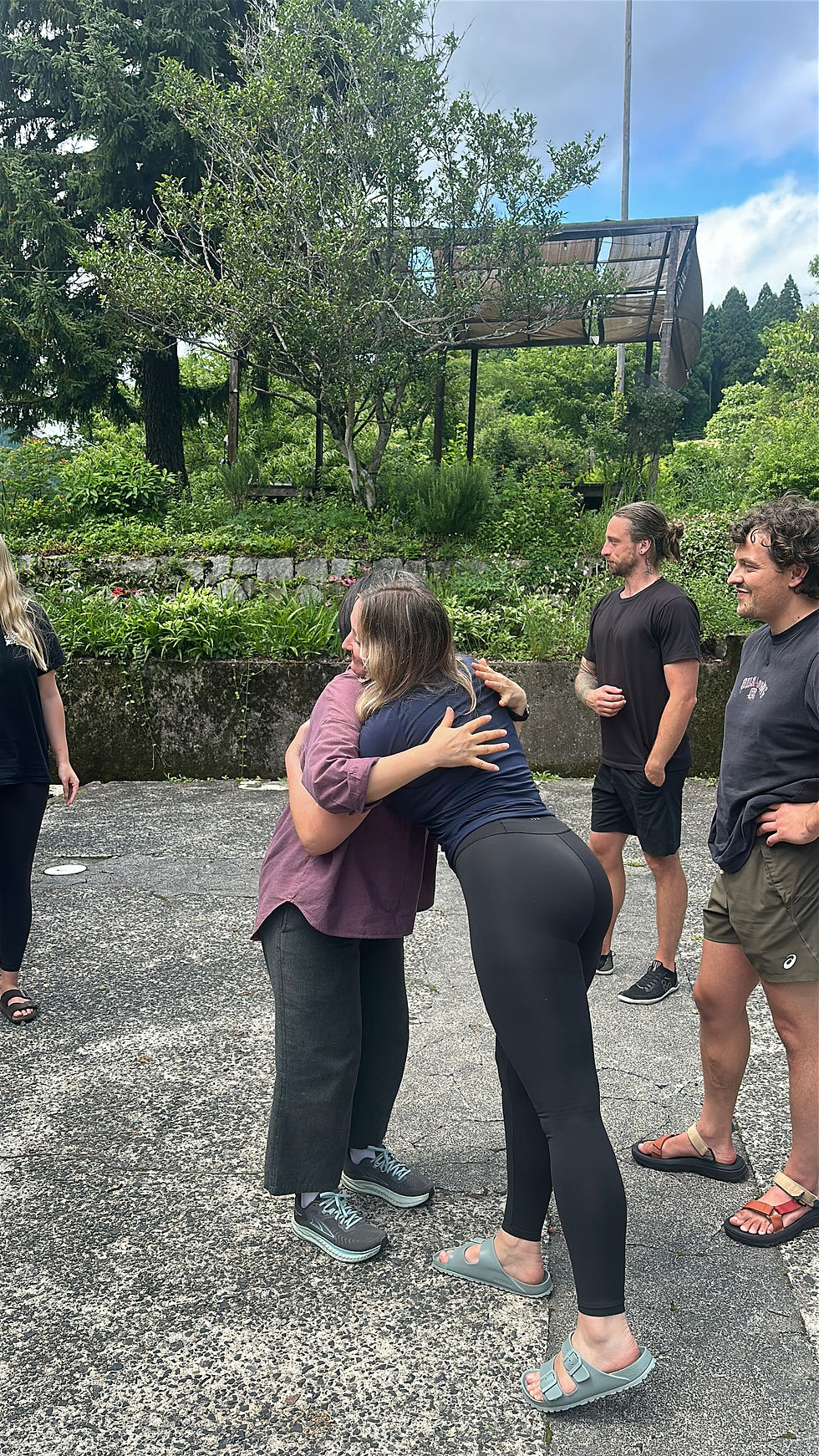
It happens when people feel safe enough to soften. Safe enough to ask questions.Safe enough to be seen.
In a small group, there is space.
Space to breathe.Space to be heard.Space to pause when you need to.Space to laugh, cry, reflect, and simply be human.
There is less pressure to perform.
I often notice that many students arrive carrying invisible expectations:
"I need to get this right."
"I should already know this."
"Everyone else probably understands more than me."
But something changes when the group is small.
You realise there is no race. No need to keep up with anyone. No need to disappear into the back of a room.
You become visible.
As teachers, we have time to notice when someone is struggling quietly. We have time to sit with questions that don’t have quick answers. We have time to adjust, support, and adapt.
And perhaps most importantly, students have permission to take care of themselves.
Sometimes that means taking a walk. Sometimes that means sitting out a practice. Sometimes that means needing silence.
I think that is part of therapeutic learning, too.
Because life itself rarely asks us to slow down.The world rewards productivity, endurance, and pushing through.
But our trainings are not designed around pushing.
They are designed around listening.
Listening to the body.Listening to the breath.Listening to one another.
And maybe most importantly—listening to ourselves.
Yes, smaller groups mean fewer people.
But they also mean more connection.
More support.More depth.
These trainings are not small because they are limited.
They are small because they are meant to be intimate enough for people to unfold in their own time.
And I wouldn’t want it any other way.


Comments